
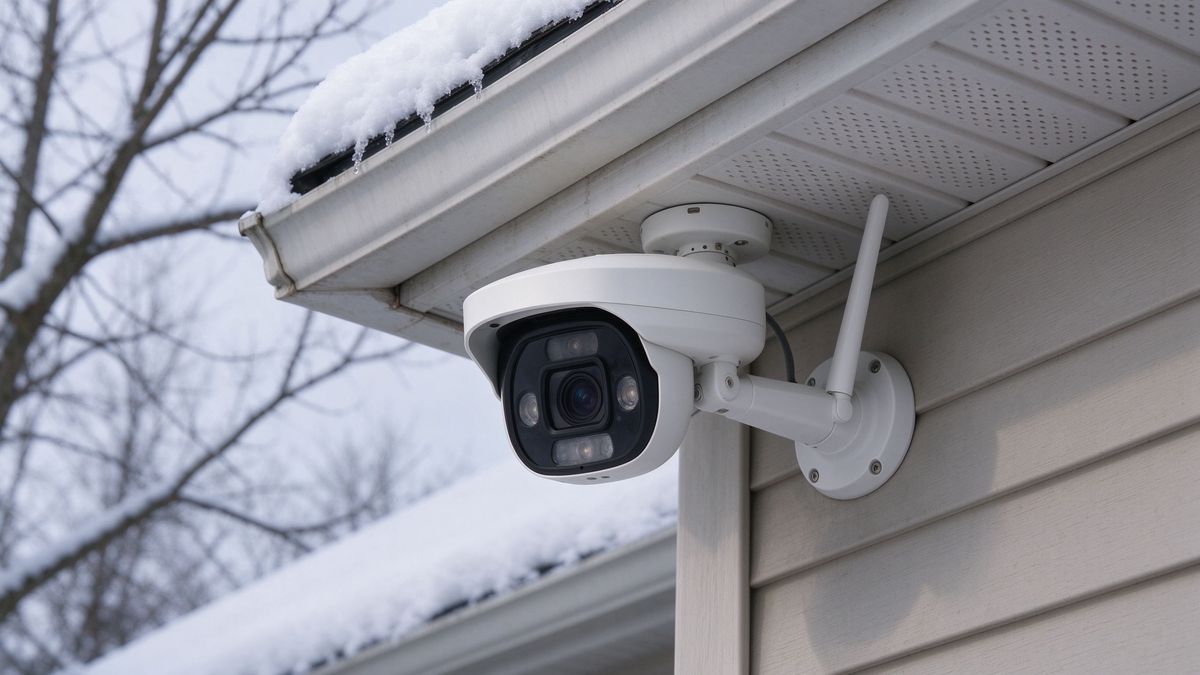
Winter is the security camera’s real test. Below freezing, battery cameras drain in days instead of weeks, lithium cells sag, lenses fog, and snow glare blinds cheap sensors – the camera that worked all summer quietly becomes a brick in January. The 2026 market’s answer is a small but real winter tier: cameras rated to -20°C or lower, solar panels that actually charge in weak winter light, and heaters or lens coatings that fight frost. This guide picks five across that tier, based on specs, pricing, and owner feedback; we do not claim hands-on testing.
The short version: the Reolink Argus 4 Pro is the winter-ready flagship (4K, solar, -20°C rating), Ring Spotlight Cam Pro is the mainstream cold-weather pick, eufy S330 is the no-subscription winter option, Tapo C425 covers the value tier, and the wired tier (Reolink PoE) is the bulletproof choice for the coldest climates.
What actually matters in winter
- Operating temperature rating: look for -20°C or lower; budget cameras rated only to -10°C struggle in real northern winters.
- Battery chemistry: lithium-ion sags below 0°C – a battery camera’s “2-month battery” becomes “2 weeks” in January. Solar panels help, but only if the panel clears snow and gets winter light.
- Frost and fog resistance: lens heating (or a heater ring) and coated lenses keep the image clear when the camera goes from -15°C to the warmth of a triggered light.
- IP rating and seals: IP65+ and quality gaskets matter in freeze-thaw cycles, where seals crack and moisture gets in.
The five picks
1. Reolink Argus 4 Pro – the winter-ready flagship
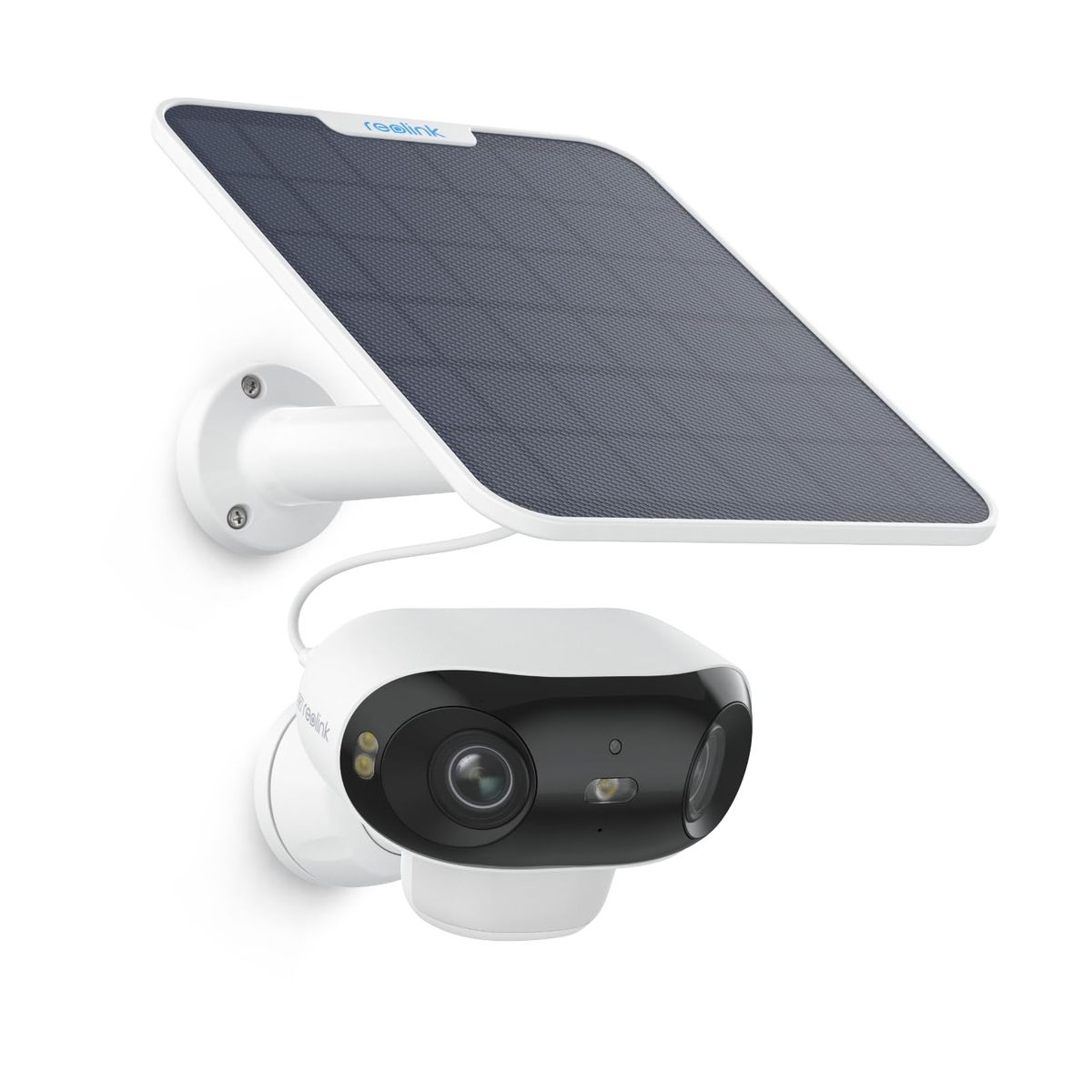
The Argus 4 Pro brings 4K dual-lens 180° video, ColorX full-color night vision, a detachable battery, solar charging, and a -20°C operating rating – the most winter-ready battery flagship, with the solar panel handling the cold-weather battery drain.
Typical street price: $219.99, often $169.99 during events.
2. Ring Spotlight Cam Pro – the mainstream cold-weather pick
Ring’s Spotlight Cam Pro combines a bright LED spotlight, 3D motion detection, and a battery/solar option with proven cold-weather reliability – the mainstream pick for buyers already in the Ring ecosystem, with the usual subscription caveat for recording history.
Typical street price: $229.99, often $169.99 during events.
3. eufy S330 (eufyCam 3) – the no-subscription winter option
The eufy S330 stores to a Home Base with zero fees, has on-device AI, and a solar panel option – a dependable no-subscription winter camera, with a battery that handles cold better than most thanks to efficient power management.
Typical street price: $549.99 (2-cam kit), often $399.99 during events.
4. Tapo C425 – the value winter pick
The Tapo C425 offers 2K video, color night vision, battery or solar power, and free microSD storage at under $100 – the value tier’s winter answer, with a -20°C rating and IP65 build that outperform the price.
Typical street price: $89.99, often $64.99 during events.
5. Reolink PoE cameras (RLC-810A etc.) – the bulletproof wired tier
For the coldest climates, a wired PoE camera has no battery to sag – the RLC-810A and its siblings run on PoE power, handle -10°C to -20°C ratings, and never need charging; pair with an NVR for 24/7 recording. The catch: wiring and an NVR are a real install project.
Typical street price: $60-90 per camera, $300-500 with an NVR kit.
Across Chinese owner communities
Chinese owner communities – many of whom live in northern winters or ship cameras to cold-weather relatives – have a sharp winter playbook: “冬天买监控,先看工作温度再看太阳能” (when buying a camera for winter, check the operating temperature before the solar panel). The community’s specific warning is about solar panels: “冬天的太阳能板是摆设” (solar panels are decorative in winter) – owners report that panels under snow or weak winter light barely top up the battery, so a solar camera’s “unlimited power” claim collapses to battery-only from December to February. Their other rule is about the lens: “起雾比没电更烦” (fog is more annoying than a dead battery) – cameras with lens heating or coated optics are rated as worth the premium. The community consensus pick list maps closely to ours: Reolink for the tech, Tapo for the value, and PoE for the truly cold.
The honest catch
Four honest limits on winter cameras. First, battery drain is real and seasonal: any battery camera loses 50-70% of its rated life below freezing – the “2-month battery” becomes 2-3 weeks, and the solar panel rarely compensates in December. Second, “operating temperature” is marketing-adjacent: a -20°C rating means the camera functions, not that the battery holds its full capacity or that the lens stays clear – the rating is a floor, not a promise. Third, wired is the only bulletproof answer: for the genuinely cold (below -20°C, or sustained deep freezes), a PoE camera with no battery and 24/7 power is the honest solution – the battery/solar tier is a compromise that works in mild winters and struggles in hard ones. Fourth, install angle matters in winter: a camera angled up catches snow glare; angled down it catches frost from its own heat – the winter install trick is a slight downward angle plus a lens-heated model if your winters are serious. Match the camera to your actual winter – mild winters can run the battery tier, hard winters should go PoE.
Bottom line
The 2026 winter outdoor camera tier is small but real: the Reolink Argus 4 Pro is the winter-ready flagship (4K, solar, -20°C), Ring Spotlight Cam Pro is the mainstream pick, eufy S330 is the no-subscription option, Tapo C425 is the value answer, and PoE is the bulletproof wired tier for hard winters. Chinese owner communities’ winter rule is the sharpest summary: “先看工作温度,再看太阳能,最后看镜头” – check the operating temperature, then the solar reality, then the lens fog. If your winter is mild, the battery tier is fine; if it’s genuinely cold, skip the batteries and go PoE. The wiring project pays for itself in January.
Sources
- Reolink official Argus 4 Pro product page and specs
- CBS News – best wireless security cameras coverage
- Ring / eufy / TP-Link official product pages
- Owner community threads: 什么值得买 / Xiaohongshu / Amazon U.S. reviews